
A steady murmur permeates the room. The students are seated in pairs at the twelve computers, trying to hack into a virtual business network. Behind a mirror is the control room acting as “the adversary”.
All computers in the lab are connected to a protected server environment enabling the students to practise cyber security in a controlled way, which is crucial for training involving various computer viruses and malicious attacks.
Cybersecurity
Alice Almgren, one of the students in the lab, is in her fourth year studying for a Master of Science in Computer Science and Software Engineering with a focus on secure systems.
“The more I learn about cybersecurity, the more I want to move out into the country without internet connection,” she says with a laugh.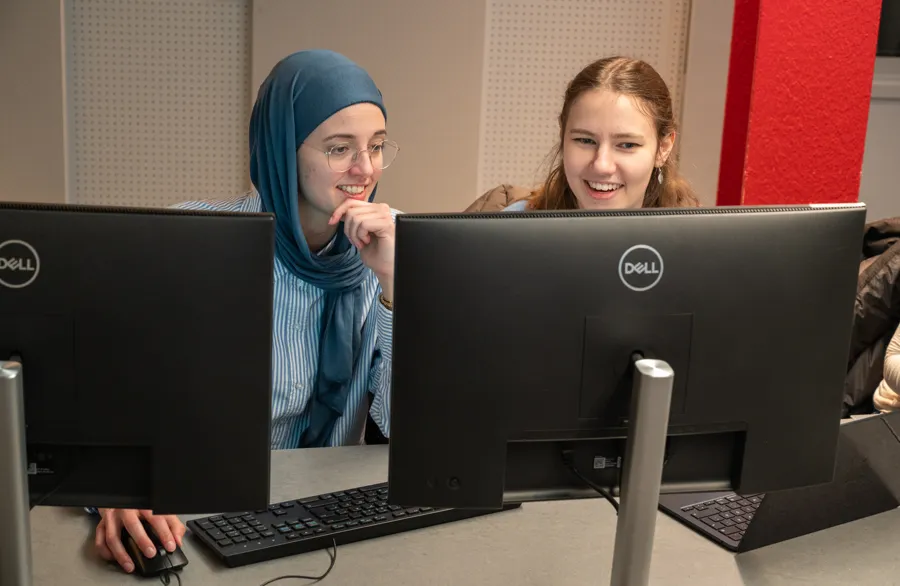 Magnus Johansson
But behind the laughter lies a serious realisation. We are always connected and our privacy is in the hands of companies hoping their security is good enough. This motivates her to learn more about how we can protect ourselves online.
“Cybersecurity is exciting and very relevant today. We hear about various intrusions almost every day. And for every course you take, you learn something shocking about how many security flaws there are. I’ve become more aware of the risks that today’s technology entails,” says Alice Almgren.
In addition to the personal exposure in terms of identity hijacking and fraud, hacker attacks cost society billions each year and are increasingly used in so-called hybrid warfare by foreign powers. That is why LiU is investing in systems security programmes, at the heart of which is the cybersecurity lab.
Future jobs
Tove Haernfelt is in her fourth year studying for a Master of Science in Information Technology. According to her, the programme provides a good theoretical basis and clear practical exercises.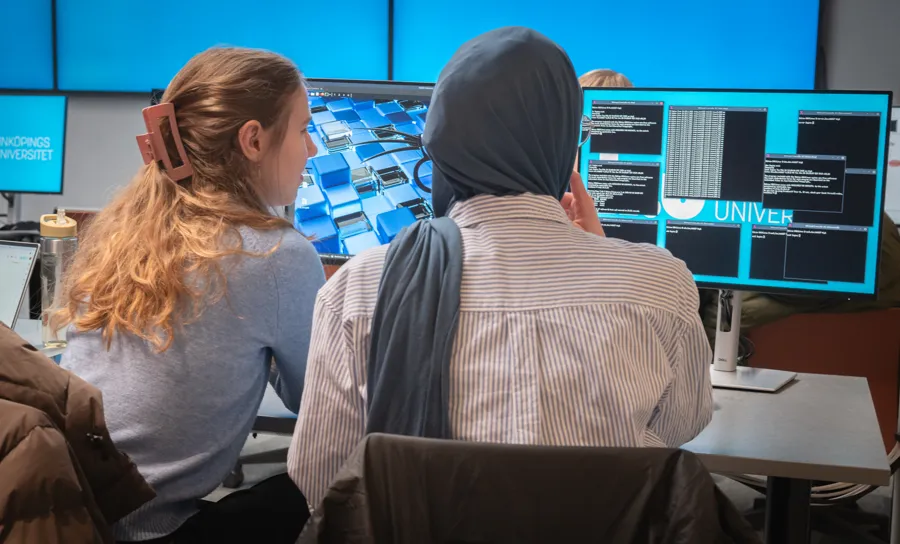 Magnus Johansson
“But I’d say it gets even better if you also join student associations that run challenges such as capture the flag. Then you really get to face these challenges and learn in a different way that’s a bit more reality-based.”
The need for cybersecurity experts seems likely to increase in the future. Alice Almgren and Tove Haernfelt see many possible jobs.
“I’d love to work in some cool security job, such as penetration tester. This means being hired by a company to try to hack them so that they can find their security flaws,” explains Tove Haernfelt.





