
From time to time, we experience moments that divide time. As when Bob Beamon won an Olympic gold medal in Mexico City by breaking the long jump world record by half a metre or when the covid vaccine was developed in record time. What was considered difficult or unthinkable was suddenly a reality.
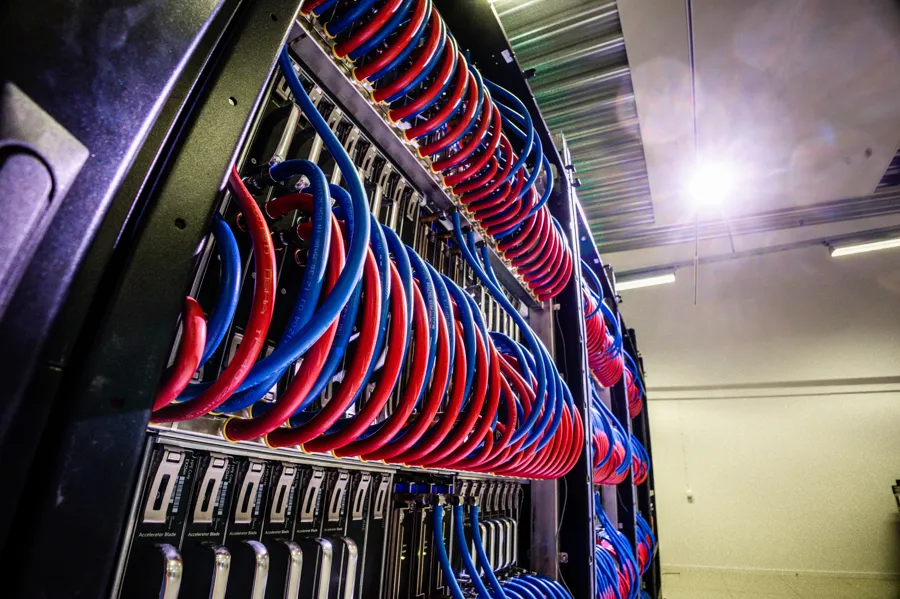
In the research world there are several such “before and afters� in the form of breakthroughs and innovations. But the question is, has any change been as big as the advent of supercomputers? Being able to process enormous amounts of data and create models of reality that make the incomprehensible comprehensible.
 Thor Balkhed
Whether it’s predicting the weather, investigating how a virus can spread, or simulating how a new bridge can handle loads, the strength of supercomputers is that they can handle hugely complex models. This means that decision-makers can get better data, companies can develop better products and scientists can understand the world in depth.
Understanding proteins and developing drugs
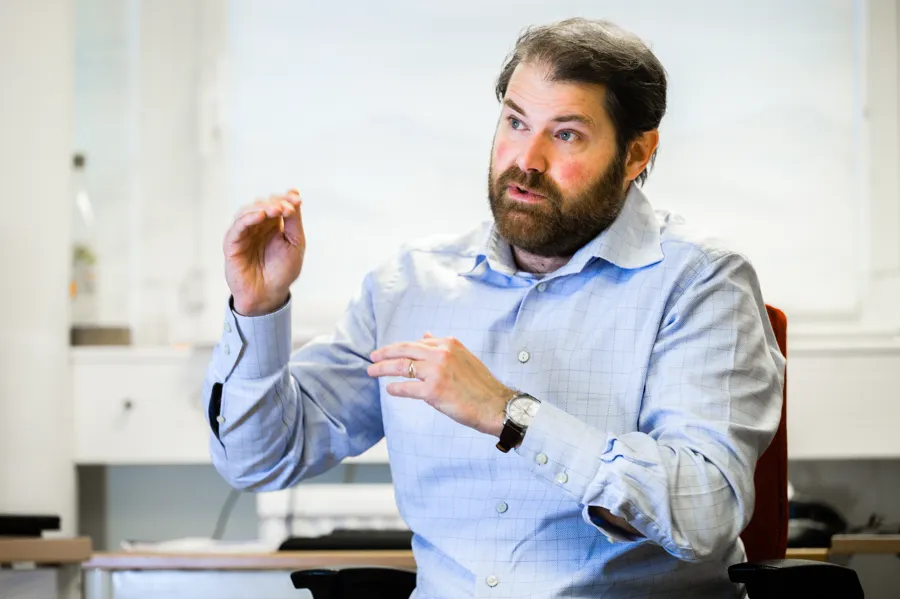
In life sciences, supercomputers are used, for example, to understand how proteins fold and how new drugs can be designed. Professor Björn Wallner at Linköping University is one of the scientists using supercomputers to simulate biological processes at the molecular level. By modelling complex biological systems, researchers can more quickly find new approaches to disease, which can lead to the development of drugs and treatments.
 Thor Balkhed
“We were used to experimenting and trying things out, including in a competition called CASP with so-called ‘blind’ predictions so that you can’t cheat. When Alphafold came up with their results, they were so good that I thought there must be something wrong, because the results beat everything else,� Wallner recalls.
The scientists behind Alphafold received the Nobel Prize in Chemistry in 2024 and Björn Wallner and his colleagues have developed the software further, and can now include information from experiments and partial data as well as predict very large and complex protein structures. All this with the help of supercomputers and AI.
Extensive calculations of future weather
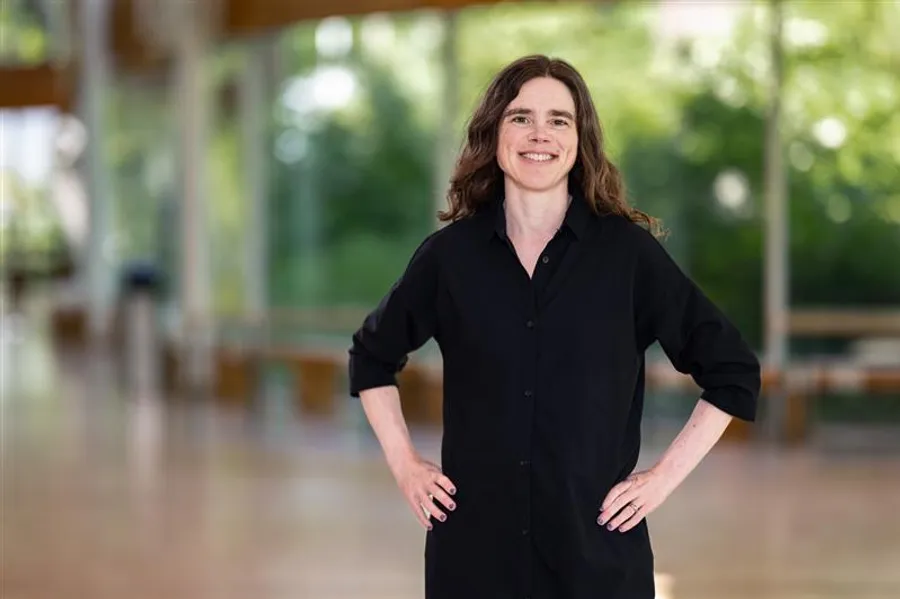
Another research area is meteorology. The weather seems unpredictable to many of us, but Professor Frida Bender at Stockholm University has it all worked out. Working with climate modelling, she feeds in huge amounts of data on temperatures, ocean currents, precipitation and atmospheric composition. Her research group can then simulate the climate of the future and produce projections of how the world may change. These simulations are so advanced that they require the use of supercomputers, as calculations would otherwise take years to complete on ordinary computers.
 Stockholms universitet
“I use supercomputers to solve a series of physical equations in millions of grid points across the Earth, the atmosphere and the oceans, and I count forward step by step, to describe the evolution of the climate, sometimes over hundreds of years. We wouldn’t be able to do that without supercomputers.�
Supercomputers have been used for weather and climate models for many decades. The first computerised weather forecast was made in the 1950s and climate modelling began in the 1960s. Frida Bender sees a development where researchers’ knowledge and methods have gone hand in hand with the development of computers.
Supercomputers do not rule out experiments
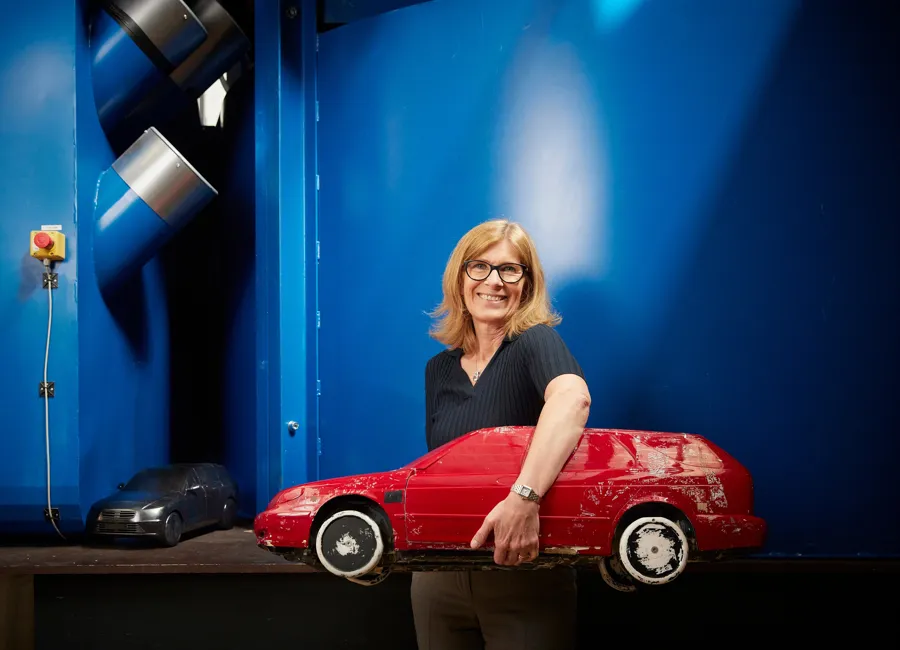
At the National Academic Infrastructure for Supercomputing in Sweden (NAISS) in Linköping, researchers in academia are given priority access to the supercomputers. But companies and public actors can also apply to use the resources, for example to develop new materials or optimise industrial processes. Such long-term collaboration exists between the automotive industry and Chalmers in Gothenburg.
 Chalmers tekniska högskola
“Experimenting freely is still important and shouldn’t really compete with making calculations using AI and supercomputers, both methods are needed. But one shouldn’t forget that, for industry, it’s a lot about reducing costs and shortening development times,� says Simone Sebben.
We can take it for granted that humans will continue to reach for new records or breakthroughs. The difference for scientists is that they now have superpowers – in the form of AI and increasingly powerful computers.





