He began studying for a master’s degree in engineering in Uppsala but dropped out. Instead, he enrolled on the psychology programme in Linköping. Yet something still felt wrong. Now he is studying psychology and engineering at the same time and feels he has finally found his place. And part of that is thanks to astronaut Marcus Wandt.
Photographer:
Anna Nilsen
Erik Ståhl is studying to be a psychologist and a civil engineer at the same time. His goal is to become a space psychologist.
“Why are you doing this? Are you completely mad? Isn’t it enough now? The programmes don't even have anything to do with each other!”
The reactions to Erik Ståhl’s decision to study two full-time degree programmes at once have been mixed, to say the least. The strongest support has come from his mother.
“She’s actually the one who made me feel that I could do this. Many people were, and still are, very sceptical. They think it’s stupid, which I understand. At the same time, they do gain a bit of respect for you,” he says.
A nagging doubt
It all began with a strong sense of being lost. Erik was studying molecular biotechnology in Uppsala, but instead of revising for exams, he found himself watching psychology videos on YouTube. This led him to decide to drop out and enrol on the psychology programme in Linköping. But after a while, he began to have doubts again.
“Psychology can sometimes be a bit too vague as science, I think, and engineering a bit too rigid. But I missed biology and maths, so I was considering dropping out and becoming a doctor instead.”
Anna Nilsen
This year, Erik has worked at the clinic where psychology students get to test their knowledge.After many conversations with both study advisers and friends, he decided to continue with his psychology studies after all – and also begin a degree in engineering biology. In his bachelor's thesis in engineering, he found a way to combine his interests. The work formed part of a larger research project on developing mathematical models of how thoughts are formed in the brain.
Meeting with Wandt
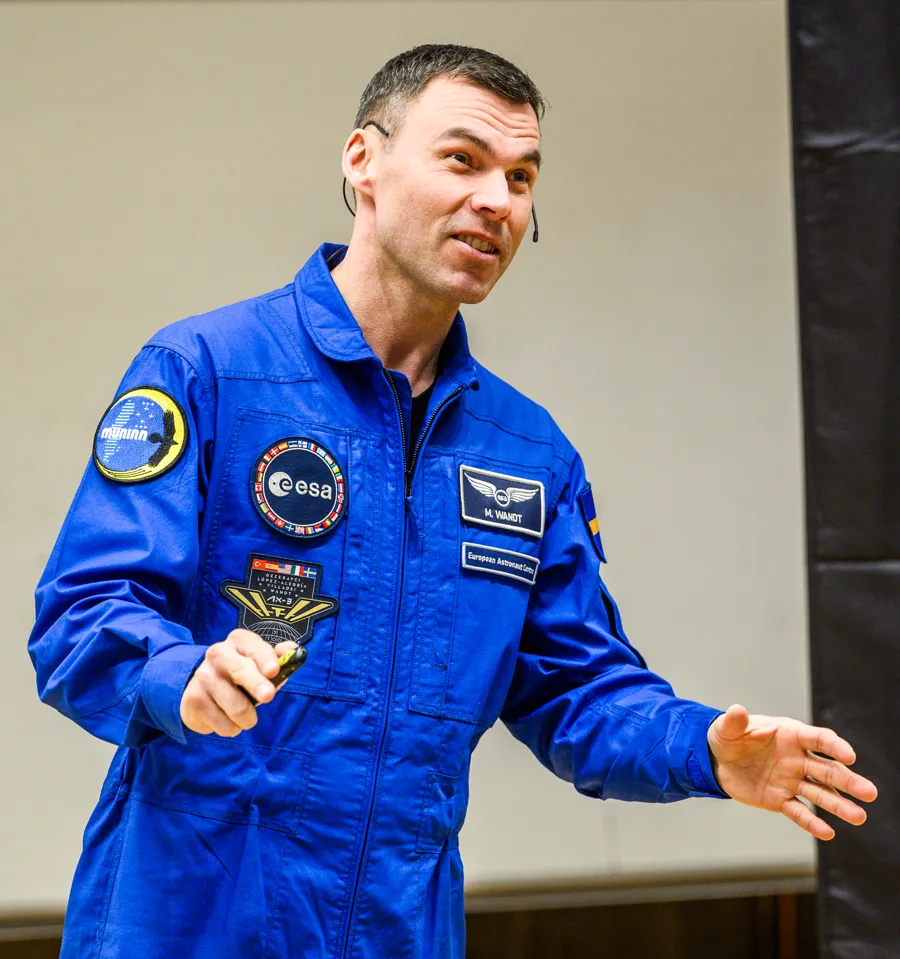
However, he was still not sure where he wanted it all to lead. Not until he attended a lunchtime lecture given by Swedish astronaut Marcus Wandt after being appointed honorary doctor at Linköping University.
Thor Balkhed
The Swedish astronaut Marcus Wandt holds a lecture.“He talked about what it was like in space and I immediately thought, this is amazing! I asked him whether psychological and cognitive research is done in space, and he said yes. That’s when I felt this might be something I could do.”
At last, Erik had found a clear goal for his dual studies: to become a space psychologist. Whether that is an official job title is uncertain, but the work does exist. In countries such as Germany, the UK and the United States, psychologists are involved in research into how human mental health is affected in space, for example during prolonged isolation or in weightlessness. The latter is of particular interest to Erik and is also the focus of his degree project on the psychology programme. More specifically, it concerns how sleep is affected in the absence of gravity.
“There isn’t that much research on it, but it affects astronauts a lot. Everyone on the International Space Station, the ISS, sleeps too little. They average six hours or less per night.”
Discipline and prioritization
This spring, he will graduate from the psychology programme. However, to become a licensed psychologist, he must first complete a year of practical training, known as PTP. He hopes to do this within the research project that his bachelor’s thesis was part of, the one on mathematical modelling of thoughts. At the same time, he will complete his engineering degree.
Studying at 200 per cent has its price, he admits. Exercise, sleep, hobbies, friends and parties have all had to take a back seat during this time. His studies require careful planning, discipline, understanding course convenors and the occasional exam resit.
Anna Nilsen
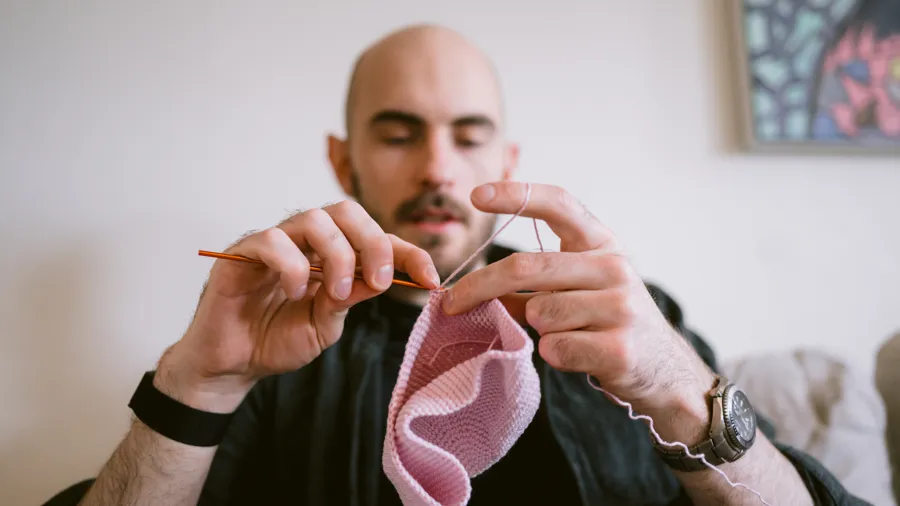
It's hard to find time for hobbies, but Erik sometimes crochets role-playing figures..Somehow, he still manages to find time to build further credentials in his field. Last year, he was accepted into a graduate school run by the European Space Agency (ESA). When we meet, he is on his way to another research project where a company in Poland has built an artificial lunar environment inside a hangar (see photos below).
Anna Nilsen
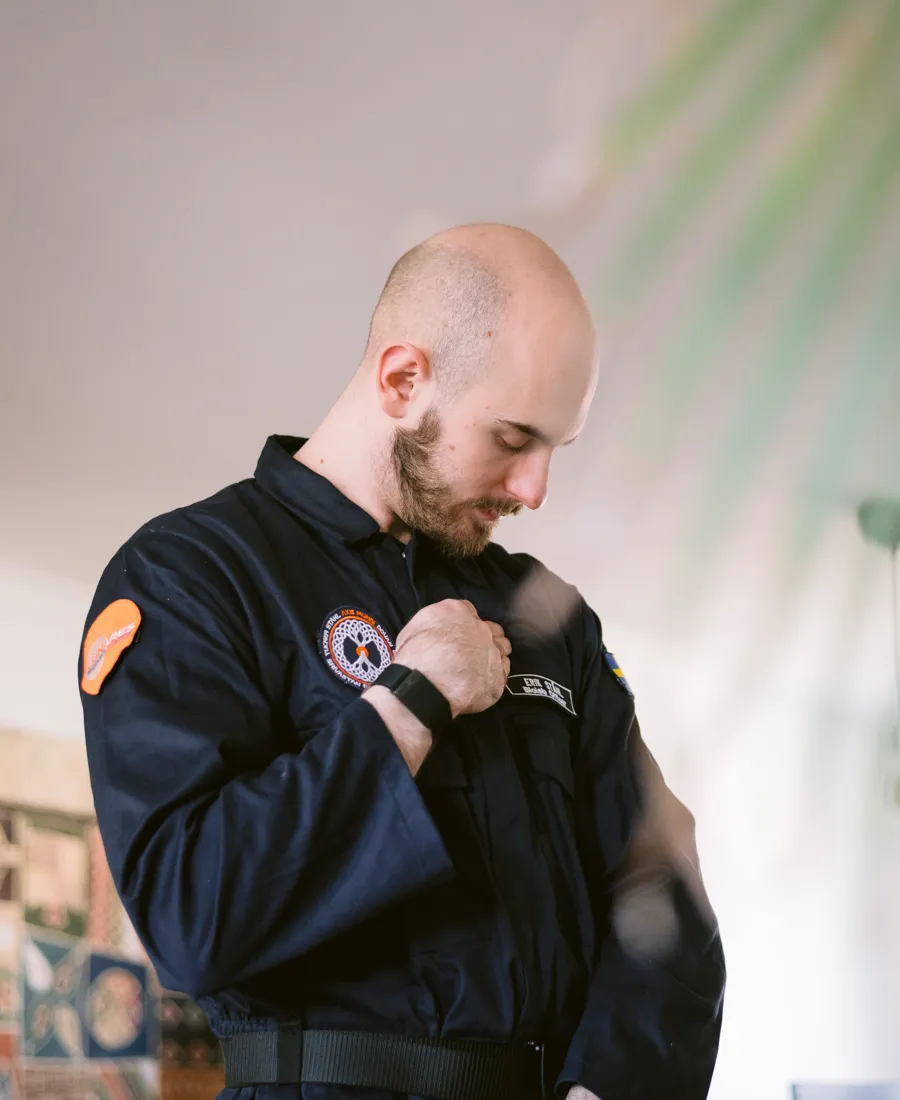
The dream is to work for the European Space Agency (ESA)..The dream of space
“Six others and I, from different parts of the world, including Australia, the United States, India and Germany, will be shut in there for two weeks simulating a lunar mission. There will be a lot of isolation studies and tests of how tasks can be performed outside the moon base.”
The participants had not met before, so one challenge was to create a functioning team. He believes his psychology studies mat prove useful there, but he also hopes to build valuable contacts for a future research career. A dream goal would be to work for ESA, and if he were ever given the chance to be an astronaut, his answer would be clear.
“I’d be lying if I said I didn’t want to, but I’m not sitting here planning to become an astronaut.”
Translation: Simon Phillips
Simulated lunar expedition - in Poland
Photographer:
LunAres Research Center
On the moon - but actually in Poland. In the winter of 2026, Erik Ståhl participated in a simulated lunar expedition.
Photographer:
LunAres Research Center
On the moon - but actually in Poland. In the winter of 2026, Erik Ståhl participated in a simulated lunar expedition.
Photographer:
LunAres Research Center
On the moon - but actually in Poland. In the winter of 2026, Erik Ståhl participated in a simulated lunar expedition.
Photographer:
LunAres Research Center
On the moon - but actually in Poland. In the winter of 2026, Erik Ståhl participated in a simulated lunar expedition.
Mer om...
Erik Ståhl
Student vid LiU
Studies: Psychology Programme and Master’s Programme in Engineering Biology
Lives: in Linköping with his girlfriend
Born: 2000
From: °Õä²ú²â
On his interest in space: “I think it started when I was little and reading Donald Duck. I always loved those adventures when they were in the jungle or underwater or in space. It was that sense of exploring and going on adventures.�
Erik's three recommendations for space-themed films and TV series
• Interstellar
• The Martian
• 3 Body Problem

 Anna Nilsen
 Thor Balkhed
 Anna Nilsen
 Anna Nilsen





