
In recent years, Markus Heilig, professor of psychiatry, has devoted a lot of energy to understanding how our lives are shaped by the stories we create to understand them.
“Half of my patients have life stories that, even if you are quite hardened, get to you and stay with you even after work.”
It has long been thought that a difficult upbringing involving traumatic experiences can in itself cause addiction later in life. But this idea is being is challenged by recent research showing that genetics plays a major role in this. Several connections can be explained by the fact that parents, who in some cases have given their children a stressful, traumatic upbringing, also passed their genes on to their children. Genes that can make them more vulnerable to addiction, for example. Markus Heilig has become almost obsessed with how common it is to misinterpret connections.
“I think it’s very fundamental and built into our brains to conclude that when things often occur together, such as childhood trauma and problems later in life, this must mean that one causes the other. This is sometimes true, but very often it isn’t”.
In most cases of addiction, genetics accounts for about 50% of the risk. Markus Heilig points out that even though genes play a big role, this does not mean that your fate is predetermined. He borrows a description from a doctoral student, that likens genetic vulnerability to gravity. If the drug is on the ground, it’s easy for a person on the moon to get up and leave, as there is not much gravity. But that would be almost impossible for a person on a planet with very high gravity pulling the body down towards the drug. Anyone with a genetic vulnerability to addiction would have to fight much harder to resist.
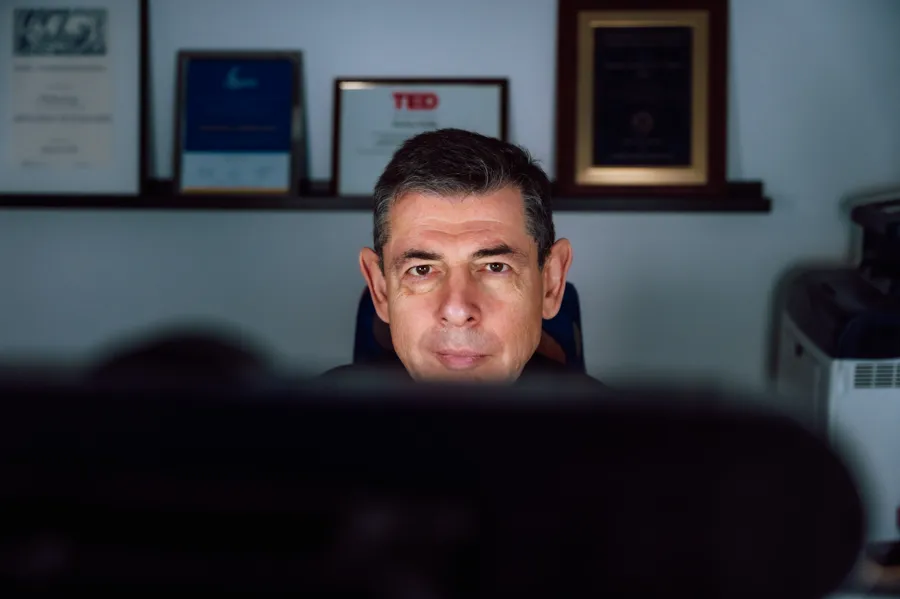 Jenny WIdén
Markus Heilig worked at the National Institutes of Health in the United States for many years.
It has been more than ten years since Markus Heilig moved back home with his family after eleven years in the United States. In Linköping, he had been given the opportunity to set up the Center for Social and Affective Neuroscience, CSAN.
“I’m a physician and my dream was to build a good university clinic where the clinical challenges can inspire research projects and where the research can have positive effects for patients.
CSAN has grown since then. Markus Heilig is now accompanied by several professors with their own research specialisations in neuroscience, both clinical research and basic research. From around 30 people at the beginning, they now number more than 100. CSAN was recently designated as one of the university’s centres of excellence – confirmation that it has become one of LiU’s strongest research environments.
Research bearing fruit
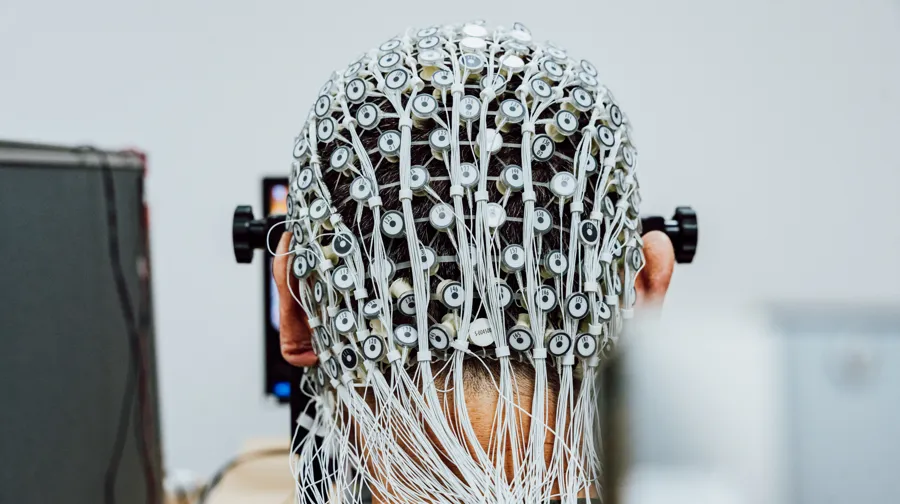
When talking about different tracks in addiction research, he divides them into “long shots” and “low-hanging fruits”. And the one that seems closest to bearing fruit is not about medical drugs. Ever since coming to Linköping, Markus Heilig’s group has collaborated with another research group to investigate whether using magnetic fields to stimulate specific areas of the brain, so-called transcranial magnetic stimulation, can help against alcohol dependence. This method is used to treat depression.
They chose to look at two different areas of the brain in one study each. Markus Heilig notes with amusement that his research team initially backed the wrong horse. It turned out that the magnetic stimulation reduced alcohol use and cravings in alcohol-dependent patients when directed at the brain’s frontal lobes, where he had not expected any effect. Together with a technology company, the researchers have now begun a clinical study of 200 people, hoping that the method will make it all the way to approved treatment.
“So right now it looks like, ironically, I have to contend with the fact that a non-pharmacological treatment is the most promising outcome of our research.”
 Jenny Widén
He stresses that as a researcher and in healthcare, you must not cling to an idea. You have to accept, and even be willing, to be proven wrong. During his career, he has repeatedly reevaluated his opinion when new reliable data has been released.
On other issues, his stance has withstood the test of time.
“If my days were over now and St. Peter was to ask me, ’what do you have to say in your defence?’ it’s not the articles in renowned journals that I’d mention.”
He would instead tell him how, as a young doctor, two years after becoming a specialist in psychiatry, he became the head of a major addiction clinic. Heroin was flowing into Sweden and he needed to take a stand on how to treat people stuck in heroin addiction. Before he took up this job, he shut himself in and read up on what research said. His conclusion was that the Swedish approach at the time ran counter to what research showed. He began to advocate that it would be better to treat more heroin-dependent patients with the drugs methadone or buprenorphine, which act in a similar way to heroin but much slower and without giving a “rush”.
His views met with strong resistance. This stimulated the small research group to do clinical studies now cited by researchers across the world. Still, it took more than a decade before the turning point came. New guidelines allowed many more patients to receive treatment. The death rate from heroin addiction had been steadily on the rise, but this changed after the year 2015. The trend is now pointing downwards.
“This was the right way to go and it saved a lot of lives.”
He mentions that going to the research lab and dreaming of developing new, fantastic drugs based on science may feel paradoxical.
“We could start by effectively using the treatments we already have. That said, when we come up with something really good, it has such great potential to make a difference in people’s lives. I think that motivates us to continue to make an effort to make new discoveries.”
 Jenny Widén





