
Many households are already good at sorting their waste, yet large quantities of material still end up in residual waste and are sent for incineration. The new sorting facility takes over where household sorting stops. It automatically separates plastics, metals, paper and cardboard, and organic material. With its broad sorting capacity, the facility is unique of its kind in the country.
Residual waste is sorted mechanically in several stages. In the new facility, the different fractions can both be identified and separated for material recycling or energy recovery. This is done using techniques such as screening, advanced NIR sensors, magnets and X‑ray systems.
 Ulrik Svedin
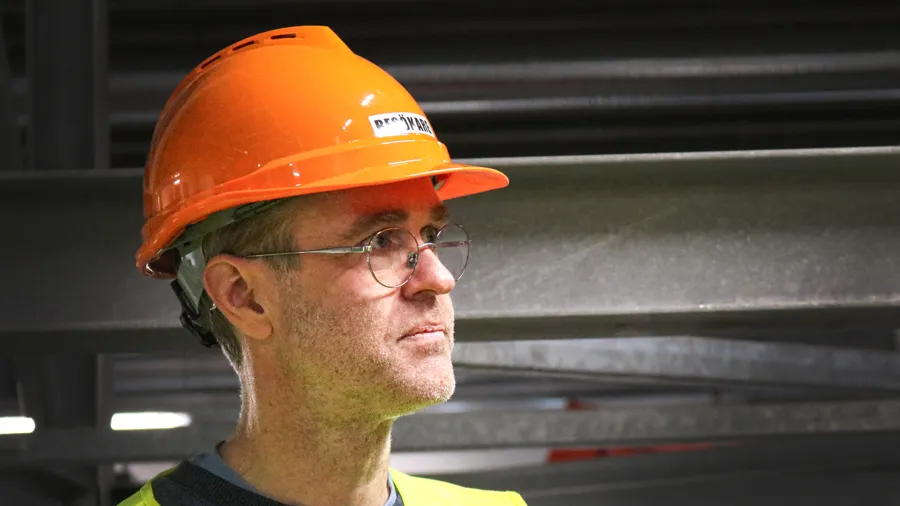
− Residual household waste contains a high proportion of organic material. Much of it is food waste that households and kitchens have not sorted as food waste. This material has potential for biogas production, says Niclas Svensson, Associate Professor at Linköping University.
In the study, which is funded with SEK 4.4 million by the Swedish Energy Agency, this “lost resource� plays a central role. Organic material that is sorted entirely by machines is currently not classified as source separated. This study can contribute important knowledge about mechanical sorting in particular.
− The project can provide a scientific basis for assessing whether a mechanically sorted organic fraction could be a resource efficient option in future biogas systems, says Niclas Svensson.
Among other things, the researchers will compare mechanically sorted organic material from residual waste with the organic waste that consumers have source separated themselves.
Measurements and testing
Experience so far from the new sorting facility shows that around 19 per cent of the weight of residual waste can be sorted out as an organic fraction. This will be studied in more detail by researchers at Linköping University, in collaboration with researchers and experts from Tekniska verken.
We must see what concentration
of bio‑waste we can achieve
− We need to carry out extensive measurements and tests. We must see what concentration of bio‑waste we can achieve. We will examine how much biogas it produces and determine what remains in the fertiliser after the biogas process.
The nutrient‑rich fertiliser is a separate product after the biogas has been produced. Large quantities are generated and can be used for cultivation.
− But first we must ensure compliance with limit values for substances that may be harmful to the environment and affect crops from this specific fraction of organic waste, explains Niclas Svensson.
Crucial
 Ulrik Svedin
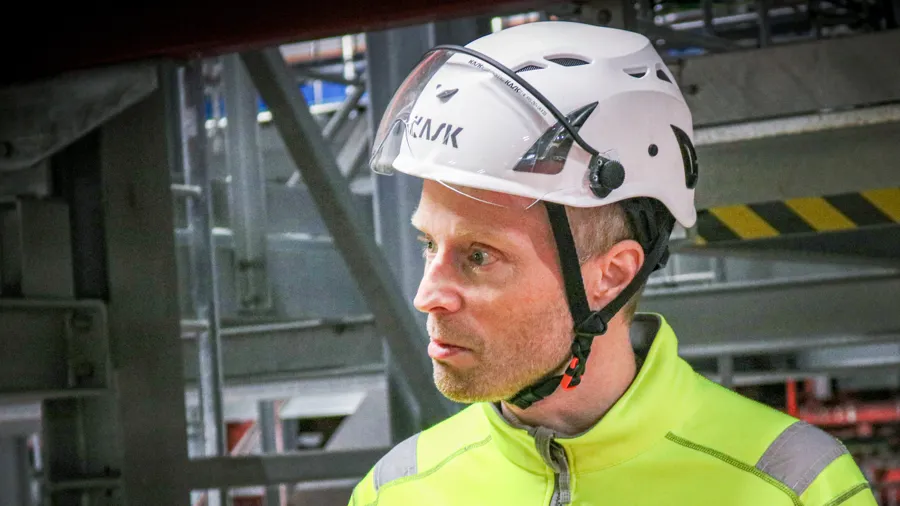
− If we are to meet the EU targets for material recycling, household sorting alone is not enough. We need mechanical sorting as a safety net to capture what ends up in the wrong place and to deliver significant climate and resource benefits. Mechanically sorting residual waste allows us to access fractions that have previously gone to energy recovery, says Per Björneld, one of the project managers for the sorting facility at Tekniska verken.





