
“Students, and everyone really, need general scientific and technical knowledge to be able to navigate in society. This includes critical thinking, digital source criticism and dealing with deepfakes,� says Jonas Hallström, professor of technology didactics at Linköping University.
He chairs the board of the National Graduate School in Science and Technology Education Research, FontD, located at LiU’s Campus Norrköping for almost 25 years now. A collaboration between eight higher education institutions, FontD aims to educate teachers and teacher educators on how to research teaching and learning in technology and science. It is hoped that, in the long term, this will result in increased public interest in the subjects commonly abbreviated as STEM – Science, Technology, Engineering, Mathematics.
 Sara Läthén
“Teaching is a complex matter and we want to contribute evidence that can improve it, even though this often concerns small pieces of a larger puzzle,� says Jonas Hallström.
Evidence-based research
FontD was recently granted an extension for another five years by the Swedish Research Council. In total, there are ten places on the doctoral programme. Konrad Schönborn, professor of visual learning at LiU and scientific leader of FontD, believes that the graduate school is necessary for several reasons.
“We often hear about PISA results and downward trends in Swedish students’ natural science abilities, as well as decreased interest in STEM. There is pressure on the teaching staff to develop these subjects, while many teachers lack full competence in the subjects they teach. In addition, the government is discussing how AI and digital technology should be integrated into schools. FontD contributes evidence-based research that can be used directly in classrooms and in teacher education,� he says.
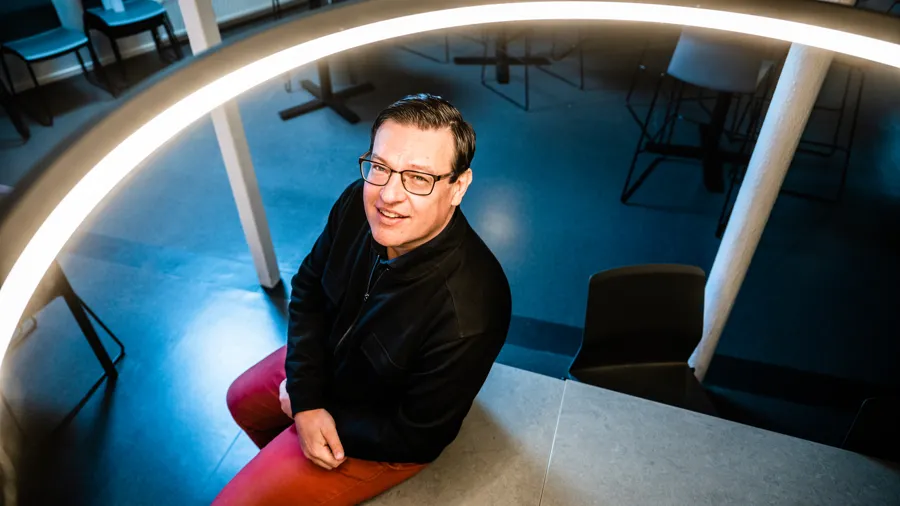 Thor Balkhed
Knowledge hub
One of the overall objectives is for the graduate school to be a knowledge hub that contributes to developing teacher education, school and preschool as concerns the natural sciences and technology. But to actually measure the direct effect is almost impossible according to Jonas Hallström.
“You can’t prove a direct link, but many of our former students work in schools and bring the research results there,� he says.
Konrad Schönborn adds:
“FontD alumni also influence teacher education and school development through their later roles in academia, in government agencies or as school leaders. But there is a balance; we would like to keep the best doctoral students as lecturers, which means that they don’t always return to schools, where they could make the most difference.�
Quality assurance
To ensure high quality, FontD has a scientific committee, consisting of internationally prominent researchers in the didactics of technology and the natural sciences who review FontD’s work annually.
“The Swedish Research Council has recently begun to evaluate the long-term effects of the graduate schools, such as how many people defend their doctoral thesis, how many people return to the school system and how universities have cooperated. And our international scientific committee also functions as an important quality guarantee,� says Konrad Schönborn.





